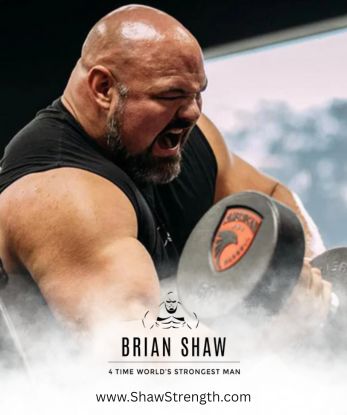
Should you really be pushing yourself until you can’t lift another rep? It’s a question that’s split gym floors, training forums, and even the experts themselves: is training to failure the key to muscle growth — or a fast track to overtraining and burnout?
According to VeryWellFit.com, “training to failure” (also known as concentric failure) means reaching the exact point where your muscles physically can’t complete another repetition with good form. If you can still push one more clean rep, you haven’t actually failed yet.
It’s the feeling when your arms lock up halfway through that final curl, or your chest won’t move the bar an inch further — your energy stores are tapped out, and lactic acid has built up enough to force you to stop.
This technique, also referred to as AMRAP (“as many reps as possible”), has been used for decades by gym-goers and bodybuilders to push their limits. The idea is simple: If your muscles can’t go any further, they’ll rebuild stronger. But not everyone agrees it’s the best way to train.
VeryWellFit.com notes that while training to failure may increase strength and size faster and help advanced lifters break through a plateau, it comes with serious caveats. Overuse can hinder growth, wreck form, and lead to injury. Some studies have even shown that pushing every set to failure spikes cortisol — the stress hormone — while suppressing the anabolic growth factors you actually want. In other words, going all-out every time can backfire.
So if “failure” isn’t always the goal, what’s the alternative?
Men’s Health points to new research suggesting that maximum effort might not always equal maximum gain.
In a review published by the Journal of Sport and Health Science, lifters who stopped short of failure saw nearly identical increases in muscle size and strength to those who pushed to the limit. The sweet spot, according to the magazine, seems to be training within zero to five reps from failure—meaning as long as you’re not leaving more than a few reps in the tank, you’ll still get results.
This concept introduces two forms of failure: technical failure — when you can no longer maintain good form — and muscular failure, where you can’t move the weight at all. Training to muscular failure is brutal and often unnecessary; training to technical failure is where many pros draw the line.
That brings us to one of the most respected names in bodybuilding history — Ronnie Coleman. The eight-time Mr. Olympia built one of the most famous physiques ever, yet his philosophy bucks the “go to failure” mindset entirely.
Speaking to Muscle & Fitness, Coleman made his stance clear, saying: “A muscle is receiving maximum benefit from reps only if you can feel it being pumped and burned, but as soon as that sensation fades or shifts to a joint or a different muscle, you’ve gone too far.
“I never go to failure. When the muscle reaches a hard tight pressurized sensation, I stop.”
For “The King,” it’s about feeling the muscle work, not annihilating it. He stops once he hits the optimum pump — the point where the muscle is fully engaged but not exhausted. That approach not only preserves form but allows consistent intensity across sessions without overtraining.
And Coleman isn’t alone in that thinking. According to OnePeloton.com, fitness experts like Peloton instructor Andy Speer and physical therapist RJ Williams emphasize the importance of training smart rather than just hard. They define failure in two ways — technical and muscular—but note that for most lifters, the “sweet spot” for growth sits just before total breakdown.
“By the time eight, 10, or 12 reps come around, it’s going to feel like you can’t do it anymore,” Speer says. “That’s the sweet spot for most people to safely and effectively train to failure for building muscle.”
The site also highlights the concept of progressive overload — gradually increasing weight, reps, or intensity over time — as a safer and equally effective alternative. Training to fatigue, rather than failure, means stopping when you feel like you could manage two or three more reps. It builds muscle while sparing your joints, tendons, and recovery time.
This approach reduces risk and can keep you training consistently, which, as most seasoned athletes will tell you, is the real secret to long-term progress. Overdoing failure work too often, according to VeryWellFit.com, can suppress performance and lead to injury or chronic fatigue — especially if you’re not allowing enough rest between sessions.
So when should you actually train to failure?
Experts generally agree it’s best used sparingly. OnePeloton.com recommends saving it for the final set of a workout block or the last exercise of the day—when you’ve already warmed up and have nothing left that needs full strength. It can also be a useful benchmark for understanding your limits or breaking through a plateau, as long as it’s not your everyday training method.
In practice, serious lifters might go to failure only a few times a month—or use it strategically during a short phase of a training cycle. For beginners, it’s often better avoided altogether until form and control are second nature.
So, should you train to failure?
If you’re Ronnie Coleman, the answer is a hard no… and his eight Sandow trophies suggest that you don’t have to, either.
But for the average gym-goer, the truth lies somewhere in the middle. Pushing yourself close to failure — without crossing the line — is often enough to trigger growth, strength, and endurance, especially when paired with solid recovery.
Featured image credit: Instagram/RonnieColeman08 (screenshot)